

Growing Older, the Benefits and
how Intermittent Fasting can help with the downsides
Growing Older: The Gifts and Challenges
Ageing brings wonderful rewards:
- Wisdom from decades of life experience.
- Perspective — knowing what truly matters.
- Resilience — having weathered storms before.
But it also comes with biological shifts that can affect health:
- Slower metabolism.
- Increased insulin resistance.
- Stiffening blood vessels.
- Loss of muscle strength.
- Rising inflammation.
These changes don’t define us, but they do set the stage for health challenges like diabetes, heart disease, arthritis, and memory decline.
What is Intermittent Fasting?
Intermittent fasting (IF) is not a diet — it’s a pattern of eating.
Instead of restricting what you eat, IF focuses on when you eat.
- Eating happens within a set “window.”
- Fasting happens during the remaining hours.
- During fasting, your body resets, repairs, and recharges.

Think of fasting as closing the kitchen at night so the “cleanup crew” inside your body can get to work.
Why Fasting is Especially Helpful After 70
At 70+, the body needs extra support. Intermittent fasting helps because:
- Supports metabolism: Prevents slow weight gain.
- Improves insulin use: Lowers diabetes risk.
- Protects the heart: Lowers cholesterol and blood pressure.
- Preserves muscle: When combined with protein-rich meals and light exercise.
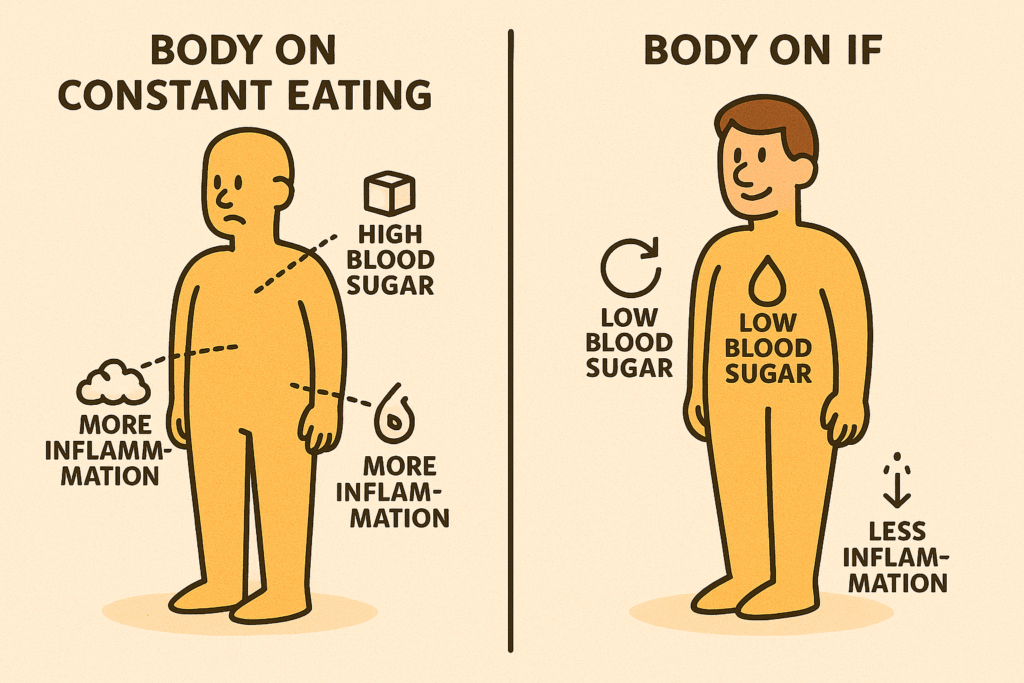
- Reduces inflammation: Helping arthritis, joint stiffness, and memory.
In other words, fasting slows the clock on many age-related issues.
But is Fasting Safe for Seniors?
Yes — when done gently and wisely.
Intermittent fasting is not about skipping meals recklessly. It’s about finding the rhythm that works for you.
Safe fasting for seniors means:
- Shorter fasting windows (12–14 hrs).
- Nutrient-rich meals.
- Plenty of fluids.
- Listening to your body and adjusting.
Senior Tip Box:
🟩 “Think of fasting as pausing the kitchen, not starving yourself.”
First Gentle Step
Before we dive deeper, here’s something you can try tonight:
- Don’t snack afterward.
- Eat dinner by 7:00 pm.
- Eat breakfast at 7:00 am the next morning.
That’s a 12-hour fast. Simple. Safe. Powerful.
Try this 3 times in one week. Notice how your energy feels in the morning.
Senior-Specific Benefits
For Type 2 Diabetes & Insulin Resistance
- Improves blood sugar control.
- Reduces medication need (with doctor guidance).
For Cardiovascular Health
- Supports circulation.
- Reduces strain on the heart.
For Inflammation & Immune Health
- Calms chronic inflammation.
- Helps joint pain and stiffness.
For Weight Management & Aging
- Easier weight control without strict diets.
- Protects independence by preserving mobility.